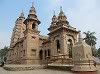
Spirituality in India boasts a pallette of religions. Incidentally, the term ‘Hindu’ was used by the Arab traders to identify the people living east of the River Indus. Indus came to be known as Sindhu and the term Hindu was born. Uttar Pradesh, a state in the Indo-Gangetic plains had a flourishing trade, and became a political citadel as well. Many faiths and religions have mingled and coexisted in this land. Quite like the rest of India, there are thousands of holy places here, marked with the presence of sages, seers, devotees and mystics, bygone and present.
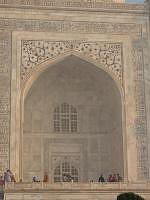
A blue sky cuddled the cloudlike Taj Mahal. Smartly turned out guides led tourists around Emperor Shah Jahan’s success in immortalizing his love for his queen Mumtaz Mahal. Well of course, the edifice commemorates love. It is also a synonym of Indian architecture to the world. Beauty, passion, engineering skills and optical tricks make it the wonder that it is.
Visitors to Uttar Pradesh in North India, find the year 1857 freedom struggle’s relics strewn all over the state. Anandway takes a quick round up… 24th April 1857 was the fateful day when Meerut city near Delhi, sparked the fire which then spread to Lucknow, Raebareilly, Unnao, Kanpur, Bithoor, Sitapur, Badaun, Bareilly, Hathras, Shahjahanpur, Mainpuri, Faizabad, Gorakhpur, Deoria, Azamgarh, Balia, Varanasi and Allahabad.